A septum piercing can have a striking and fashionable appearance. It fits a variety of jewellery types and face shapes, which is why many people select it. However, healing issues may arise, particularly in the initial weeks.
An infected septum piercing may cause discomfort, swelling, and suffering. Because many of the symptoms resemble typical healing discomfort, it could also be concerning. People get scared because of this uncertainty.
The good news is that with the right treatment and attention, most healing difficulties get better. You can safeguard your piercing and prevent major issues by understanding the difference between irritation and infection.
In clear language, this guide describes the symptoms of an infected septum piercing, common causes, treatment procedures, healing phases, and preventative advice.
What Is a Septum Piercing?
The delicate tissue in between the nostrils is penetrated by a septum piercing. The “sweet spot,” which is located beneath the cartilage within the nose, is where professional piercers typically implant it.
This kind of nose piercing has gained popularity in social media, music culture, and fashion. Because septum jewellery can be worn as beautiful clickers, horseshoe rings, or seamless rings, many individuals enjoy its versatility.
Septum piercings require patience and good hygiene as they heal, despite the fact that they frequently heal more quickly than certain other facial piercings.
Signs of an Infected Septum Piercing
Many fresh piercings initially swell or turn slightly red. That response is typical. But rather than getting better with time, infection symptoms typically get worse.
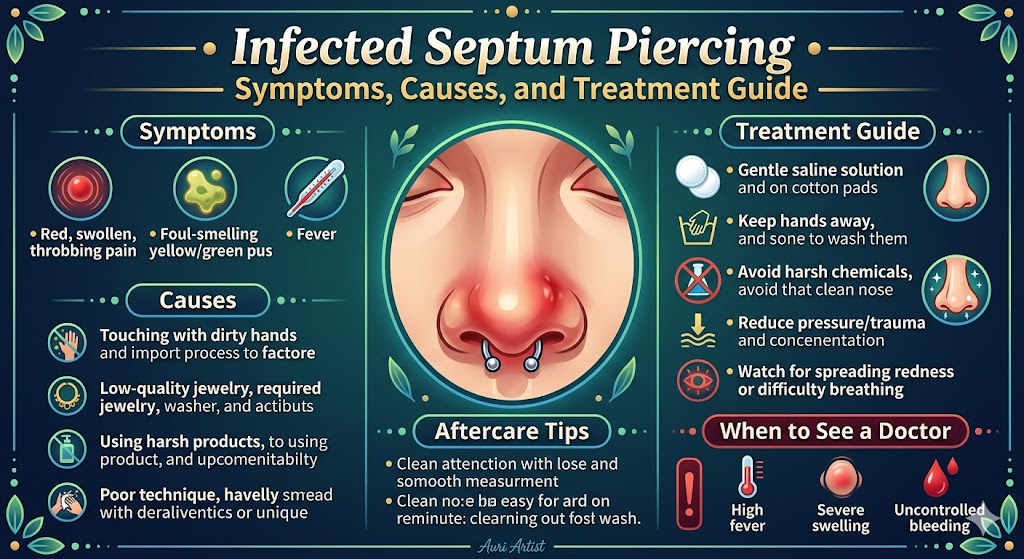
The most typical indicators of an infected septum piercing are as follows:
- Redness around the piercing site that doesn’t go away
- Increasing tenderness and swelling
- A foul-smelling yellow or green discharge
- The skin surrounding the piercing site is warm
- Pain that throbs and becomes worse every day
- In extreme situations, fever or spreading redness
Clear or white fluid may be produced by a healed septum piercing. Around the jewellery, that liquid typically dries into crusts. This is a typical aspect of healing.
The appearance of infection varies. The discharge frequently thickens, turns darker, and starts to smell bad. Additionally, pain tends to worsen rather than get better.
What Does an Infected Septum Piercing Look Like?
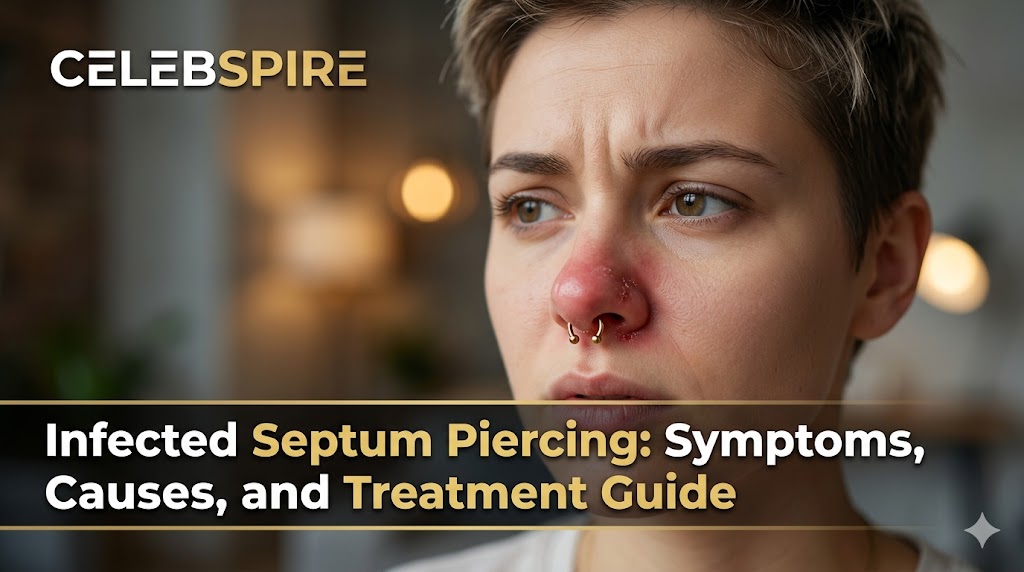
Swelling and irritation are common symptoms of an infected septum piercing. The skin may appear particularly red, glossy, or irritated. Bumps close to the piercing hole are also noticed by some.
You may feel pressure inside your nose or notice pus surrounding the jewellery. In more severe situations, the swelling may cause the jewellery to feel constricted.
Because the nose contains sensitive tissue and blood arteries, severe infections should never be disregarded.
Infected vs Irritated Septum Piercing
This is the most crucial aspect of comprehending piercing healing issues.
A lot of individuals confuse irritation with an infection. Particularly in the initial weeks following a piercing, irritation is far more frequent.
Signs of Irritation
Typically, an inflamed septum piercing results in:
- Slight discomfort
- A hint of redness
- Transient oedema
- The creation of a crust or dryness
- Sensitivity following jewellery contact or bumping
Accidental pulling, sleeping pressure, harsh cleaning agents, and excessive movement are common causes of irritation.
With little aftercare and less discomfort, the symptoms typically become better.
Signs of Infection
The behaviour of an infected septum piercing is altered. Rather than getting better, symptoms get worse.
You might observe:
- The skin surrounding the piercing is hot.
- Green or yellow pus that is thick
- A strong smell
- A rise in discomfort
- Spreading swelling
- Body pains or fever
If treatment is not received, the symptoms of the infection worsen.
Why the Difference Matters?
Healing may occasionally be hampered by treating irritation like an infection. For instance, using harsh chemicals to clean the piercing excessively could dry out the tissue and cause more inflammation.
Ignoring a genuine illness, however, can cause major problems with healing.
Observation is important. Week by week, healing piercings should gradually become better.
What Causes Septum Piercing Infections?
The risk of piercing infection can be raised by a number of circumstances.
Poor Hygiene
One of the main ways to get contaminated with bacteria is to touch the piercing with unclean hands. Throughout the day, a lot of people unintentionally twist or change their jewellery.
Bacteria are immediately introduced into the healing wound by that habit.
Low-Quality Jewelry
Low-cost metals might irritate the nose’s delicate tissue. The piercing channel may be harmed by nickel or abrasive surfaces found in low-quality jewellery.
Safer materials for jewellery consist of:
- Titanium of implant quality
- Surgical steel
- Solid gold intended for body piercings
Because titanium jewellery is lightweight and hypoallergenic, it continues to be one of the best options for people with sensitive skin.
Harsh Aftercare Products
Healing tissue can be harmed by alcohol, hydrogen peroxide, and powerful antiseptics. These products cause the skin to become dry and slow down healing.
For piercing healing, a mild saline solution is far more effective.
Trauma and Friction
Piercings on the septum are prone to irritation. The healing tissue may be harmed by towels, clothes, makeup, rubbing the nose, and unintentional bumps.
Inflammation can even result by frequently turning jewellery up and down.
Poor Piercing Technique
A poorly positioned piercing may heal unevenly or cause persistent irritation. Inadequately sterilized piercings also raise the risk of infection.
Always pick a skilled, qualified piercer who practices good hygiene.
How to Treat an Infected Septum Piercing?
With thorough cleansing and appropriate maintenance, mild infections can occasionally get better. Severe symptoms, however, need for medical care.
Clean the Piercing Gently
Twice a day, use sterile saline solution. Hold a clean cotton pad or piece of gauze against the piercing for a few minutes after soaking it.
This lessens the symptoms of inflammation and softens crust accumulation.
When cleaning, do not scour or twist the jewellery.
Keep Your Hands Away
Unless absolutely necessary, avoid touching the piercing. Continuous contact irritates the tissue and transmits bacteria.
Always wash your hands well before cleaning the area.
Avoid Harsh Chemicals
Unless instructed by a medical professional, never apply hydrogen peroxide, rubbing alcohol, or tea tree oil to an infected septum piercing.
These products frequently exacerbate irritation and dryness.
Reduce Pressure and Trauma
When you change clothing, wash your face, or go to sleep, exercise caution. Swollen tissue inside the nose might be made worse by small motions.
Steer clear of contact sports and activities that could cause damage to the piercing if at all feasible.
Watch for Worsening Symptoms
Seek medical attention if you observe:
- A fever
- Excessive swelling
- Redness spreading
- A dense green discharge
- Severe discomfort
- Inability to breathe via the nose
If the infection is serious, a doctor might recommend antibiotics.
Septum Piercing Aftercare Tips
Regular aftercare promotes recovery and reduces the chance of infection.
A healthy regimen doesn’t have to be difficult. Usually, gentle treatment is the most effective.
Use Saline Solution Daily
Without causing tissue damage, sterile saline spray aids with piercing cleaning. Both in the morning and at night, clean the area.
Don’t clean too much. Cleaning too much could aggravate the piercing.
Leave the Jewelry Alone
Stability is necessary for healing piercings. In addition to interfering with healing, twisting or turning the jewellery causes tiny tears inside the piercing canal.
Maintain Good Hygiene
Makeup and skincare products should be kept away from the piercing region, and pillowcases should be changed frequently.
During the healing process, attempt to carefully control any allergies or recurrent nose discomfort.
Stay Patient
Although healing takes time, septum piercings frequently heal more quickly than cartilage piercings. You might feel more sensitive on certain days than others.
Early on in the healing process, some swelling and soreness are typical.
Is Pus Normal in Septum Piercings?
Not all the time.
Normal healing may result in the appearance of clear or yellowish fluid. This fluid typically doesn’t smell terrible and dries into a light crust around the jewellery.
Infection is frequently indicated by thick green or yellow pus. It may be accompanied by heat, an unpleasant smell, and increasing pain
Keep a watchful eye on the symptoms for the next several days if you’re not sure if the discharge is typical.
Healing inflammation is typically indicated by improving symptoms. An infection may be indicated by worsening symptoms.
Should You Remove an Infected Septum Piercing?
When an infection manifests, many people want to take off their jewellery right away. Sometimes, that response can lead to more issues.
If the piercing hole closes quickly, taking off jewellery too soon could trap an infection inside the skin.
Professionals frequently advise leaving the jewellery in place while the infection is being treated. The jewellery keeps the wound from closing and permits drainage.
However, jewellery replacement or removal under expert supervision may be necessary in cases of extreme swelling or allergic reactions.
Tight jewellery should never be forced out of swollen tissue at home.
Healing Timeline Expectations
Each person recovers in a unique way. Healing speed is influenced by age, immune system health, personal hygiene, and jewellery quality.
Although deeper healing may take longer, most septum piercings heal in two to four months.
Early Healing Stage
Typically, the initial weeks consist of:
- Moderate oedema
- Sensitivity
- Mild crusting
- Sensitivity when cleaning
Usually, these symptoms go better over time.
Mid-Healing Stage
The piercing usually feels less painful after a few weeks. The tissue gets calmer and there is less crusting.
However, if the jewellery is bumped or moved excessively, irritation may still occur.
Final Healing Stage
When a septum piercing has healed completely, it should feel secure and comfortable. Heat, drainage, and pain should all go away.
After trauma or inadequate hygiene, piercings that have healed may become irritating once more.
How to Prevent Future Infections?
Treatment is not as important as prevention.
Maintaining proper cleanliness promotes faster recovery and lowers the risk of problems.
Choose a Professional Piercer
A professional piercer use safe jewellery materials, sterile instruments, and appropriate placement methods.
Never pick a piercing parlour solely on the basis of affordability.
Wear High-Quality Jewelry
One of the safest solutions for body piercing healing is still titanium jewellery. Smooth surfaces aid in the correct healing of the tissue and lessen discomfort.
Follow a Consistent Aftercare Routine
The best routines are simple ones. Avoid touching the jewellery, clean with a saline solution, and shield the region from harm.
Avoid changing jewellery too soon while you’re recuperating.
Listen to Your Body
Pay attention if symptoms get worse rather than better. Larger healing issues later on are avoided with early intervention.
Why Septum Piercings Remain Popular Despite Risks?
Septum piercings are still popular because they provide a daring yet adaptable look. Depending on how they want to look, people can wear delicate jewellery or bold statement items.
Influencers, musicians, celebrities, and alternative fashion groups have all contributed to the mainstreaming of septum jewellery.
The fact that septum rings can occasionally be readily concealed by flipping the jewellery upward within the nose is appreciated by many.
Despite the concerns, most people can heal comfortably and without serious issues when piercings are properly cared for.
When Should You See a Doctor for a Piercing Infection?
Certain symptoms call for medical care rather than self-care.
Speak with a medical expert if you encounter:
- Chills or fever
- Excessive swelling of the face
- Redness spreading
- A dense green discharge
- Severe discomfort
- Continuous bleeding
- Breathing difficulties
Don’t overlook symptoms that get worse. Serious infection risk is decreased by prompt treatment.
Final Thoughts
Particularly for first-time piercing clients, an infected septum piercing can be traumatic. The good news is that with patience, excellent cleanliness, and appropriate aftercare, many healing issues get better.
Understanding the distinction between discomfort and infection is crucial. During the healing process, mild swelling and soreness are typical. More worrisome symptoms include growing redness, foul-smelling discharge, and worsening pain.
Good jewellery, gentle saline cleaning, and refraining from needless touching all promote a good recuperation. Seek medical attention as soon as possible if symptoms worsen or become severe.
Most septum piercings heal well and continue to be a fashionable way to alter one’s body for years with the right maintenance.