What Are Angel Fangs Piercings?
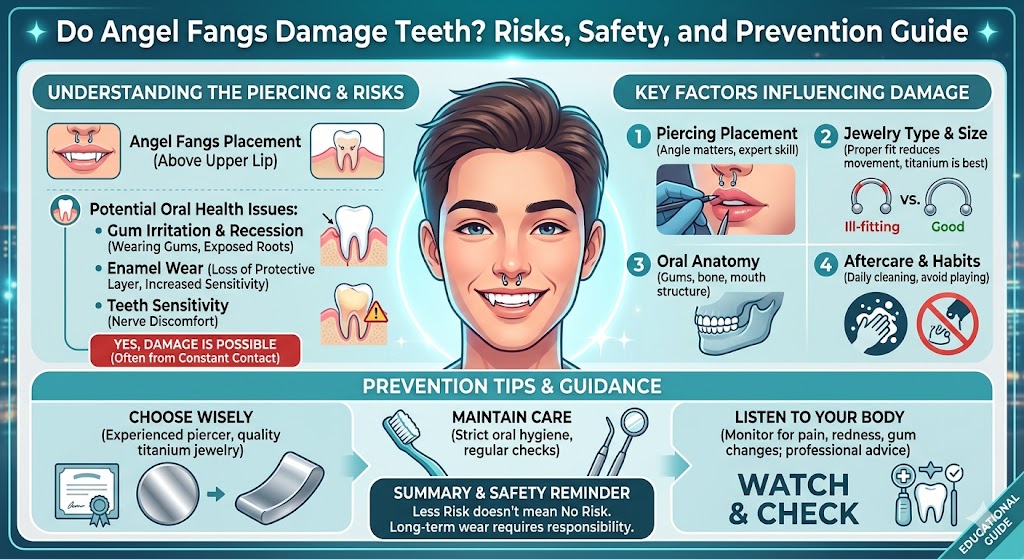
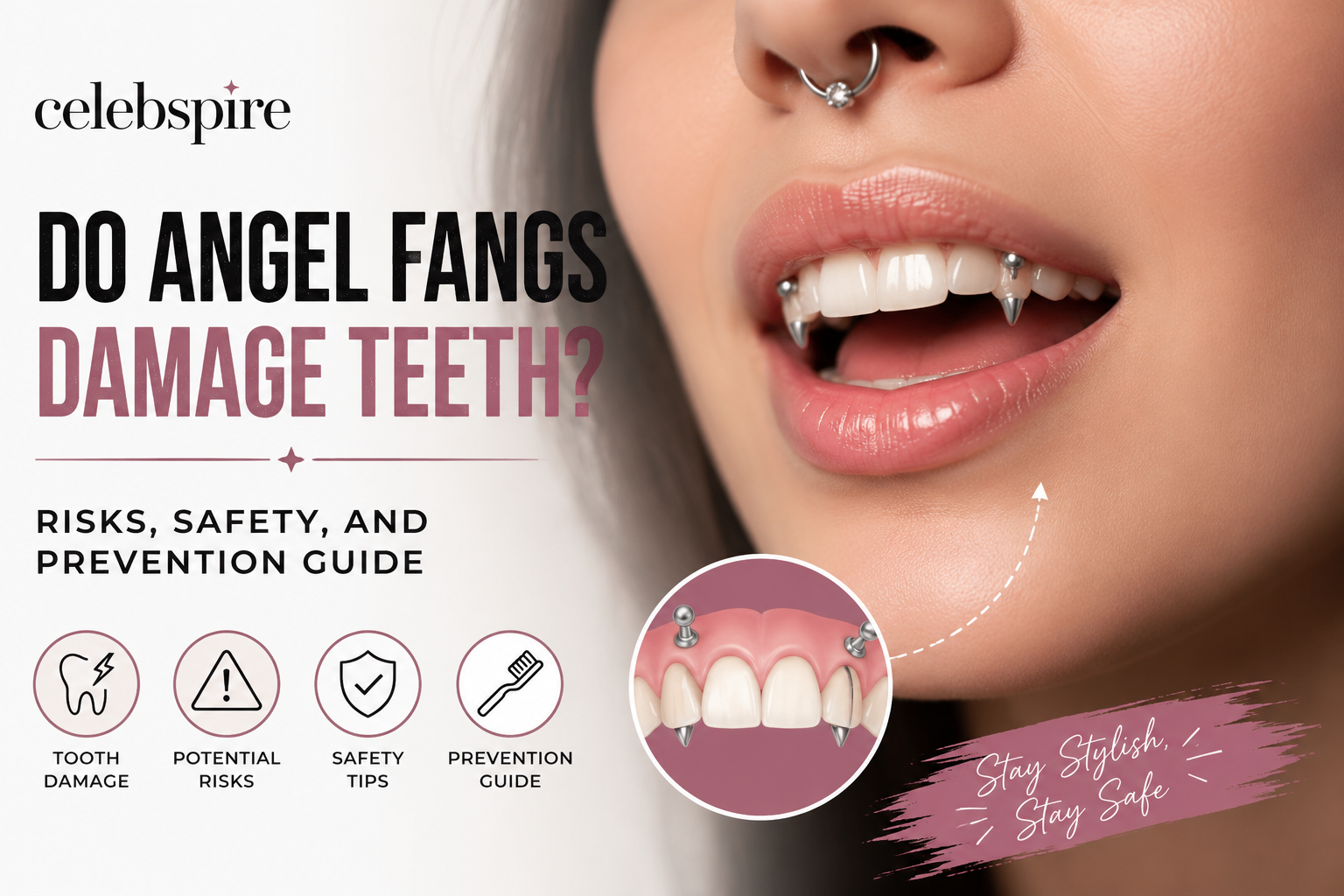
One kind of lip piercing that is positioned above the upper lip is called an angel fang. Typically, they are positioned symmetrically on either side of the cupid’s bow. The majority of people wear curved barbells that resemble fangs. Due to its strong and edgy appearance, this piercing technique has gained popularity in alternative fashion and body modification culture.
Angel fangs often do not go through the inside of the mouth, in contrast to some oral piercings. These are upper lip piercings in the surface style. Many people think they are totally safe for teeth and gums because of this positioning. That isn’t always the case, though.
Because both techniques minimize direct contact within the mouth, angel fangs and vertical labret piercings are frequently compared. Nevertheless, each anatomy is unique. After prolonged use, some persons have minimal irritation, while others develop enamel wear or gum sensitivity.
Do Angel Fangs Damage Teeth or Gums?
Yes, in certain situations, angel fangs can harm teeth or gums. Although there is a risk, not everyone is at risk.
The majority of issues arise when the jewelry frequently comes into contact with the gums or teeth. At first, small motions might not appear significant. However, persistent rubbing can erode tooth enamel and irritate soft tissue over time.
- Placement of piercings
- The size and shape of jewelry
- The anatomy of the mouth
- Aftercare practices
- Material for jewelry
The risk is typically reduced by a correctly positioned piercing. To minimize contact with the mouth, a skilled piercer delicately places the jewelry. Another important factor in the safety of oral piercings is high-quality jewelry.
Some people never have dental problems. Within months, others may experience discomfort, gum irritation, or sensitivity. Regular monitoring is important because of this.
Fortunately, compared to conventional lip piercings that are placed inside the mouth, angel fangs typically result in less dental contact. However, “less risk” does not equate to “no risk.”
Oral Health Risks Explained
Gum Irritation and Gum Recession
Gums are delicate, fragile tissues. Inflammation may result from jewelry rubbing on them on a daily basis. The area may first just feel sensitive or sore. The gums may gradually separate from the teeth if inflammation persists. Gum recession is the term for this condition.
More of the tooth surface is seen when the gums recede. This exposure could result in:
- Sensitivity of teeth
- Uncomfortable eating hot or cold
- An increased chance of cavities
- A rise in oral discomfort
Gum recession typically doesn’t go away on its own. Dental care may be necessary in severe instances.
Enamel Wear
The strong outer covering that shields teeth is called tooth enamel. Despite its strength, enamel can be gradually worn down by repeated pressure.
Tiny scratches or weak places may result from metal jewelry tapping against teeth. Those weak places may eventually develop into larger enamel wear areas. The body cannot produce new enamel after it has been lost.
Individuals who have enamel damage may observe:
- Heightened sensitivity of the teeth
- Tooth edges that are rough
- discomfort when chewing
- An increased risk of cavities
When hard jewellery materials repeatedly strike teeth, the risk is increased.
Swelling During Healing
Following any lip piercing, swelling is typical. Because the tissue is irritated during the first several weeks, the jewellery may sit differently. The jewellery may be forced closer to the teeth or gums by swollen tissue.
Sometimes this brief pressure results in irritation or unintentional biting.
Additionally, healing tissue is more susceptible to germs. During this stage, poor dental care can prolong recovery and raise the risk of infection.
Dental Sensitivity
Even without obvious enamel deterioration, some persons experience minor tooth sensitivity. Soft tissue and nerves can get irritated by persistent pressure or movement around the mouth.
At first, sensitivity could come and go. On the other hand, persistent pain should never be disregarded.
What Causes Tooth Damage in Lip Piercings?
The primary issue isn’t always the piercing itself. Poor jewellery fit, bad habits, or improper placement can lead to a lot of issues.
Incorrect Jewelry Size
Large jewellery is more likely to travel around the mouth. Friction between teeth and gums is increased by additional movement.
Too-short jewellery can also cause issues. Tight jewellery can exacerbate discomfort or oedema by pressing against tissue.
During the healing process, a professional piercer typically begins with slightly lengthier jewellery. They frequently advise shrinking to lessen mobility as swelling subsides.
Poor Placement
Everything is impacted by placement.
The jewellery may continuously strike the teeth if the piercing angle is too close to the mouth. Before piercing, an untrained piercer might not take facial structure, gum location, or lip shape into account.
Long-term dental health issues are more likely as a result of such error.
Low-Quality Jewelry Materials
Rough edges and dangerous metals are common in inexpensive jewellery. Soft tissue is more easily irritated by those surfaces.
Additionally, certain inferior materials may cause inflammation or allergic reactions. More swelling and increased pressure inside the mouth are caused by irritated tissue.
Because titanium jewellery is smooth, lightweight, and biocompatible, it is typically regarded as one of the safest options.
Playing With the Jewelry
Unconsciously, a lot of people move, tug, or bite their lip jewellery. More force is applied to the teeth and gums with repeated movement.
Complications from oral piercings and enamel wear are greatly increased by this behaviour.
Long-Term Wear Without Adjustment
Over time, the mouth changes. Once-perfectly fitting jewellery may gradually sit differently due to gum changes or tissue mobility.
Frequent examinations with a piercer assist in spotting issues before they worsen.
How to Prevent Dental Issues?
Although you can’t eliminate all danger, you can lessen the likelihood of harm.
Choose an Experienced Piercer
Most people are unaware of how important professional placement is.
Before putting on the jewellery, a trained piercer examines the structure of the face. They select angles that minimise oral contact and lessen needless gum pressure.
Never select a piercer only on the basis of affordability.
Use High-Quality Jewelry
Comfort and safety are directly impacted by the quality of jewellery.
Because titanium jewellery is smooth and lightweight, it is frequently the finest choice for delicate tissue. For healing piercings, a lot of expert piercers advise using implant-grade materials.
Rough or heavy jewellery typically causes more irritation than curved barbells with polished finishes.
Maintain Good Oral Hygiene
Maintaining good hygiene protects the mouth and the piercing.
Gently brush the surrounding region. If your piercer advises it, use mouthwash without alcohol. To lessen the accumulation of microorganisms, thoroughly remove food scraps.
Unhealthy gums are less able to withstand irritation than healthy gums.
Avoid Excessive Movement
Don’t tamper with the jewellery. Refrain from biting it or using your tongue to press it up against your teeth.
Even though small behaviours might seem innocuous, frequent movement causes friction and enamel deterioration.
Schedule Dental Checkups
Before symptoms worsen, dentists can frequently identify early indicators of gum recession or tooth damage.
Frequent dental checkups help prevent long-term oral health issues and identify issues early.
Best Jewelry for Angel Fangs
The choice of jewellery has a significant impact on piercing safety.
Titanium Jewelry
One of the best materials for angel fangs is titanium. It is hypoallergenic, strong, and lightweight. Additionally, smooth titanium surfaces lessen discomfort.
Titanium is frequently more tolerable than surgical steel for people with sensitive skin or metal allergies.
Curved Barbells
The most popular type of jewellery for angel fangs is curved barbells. Compared to straight jewellery, their contour typically better conforms to the lip’s natural curve.
Pressure and movement are decreased by a suitable curve.
Smooth and Lightweight Designs
Heavy jewellery increases mobility and tugs on the piercing. Additionally, sharp edges irritate people needlessly.
Smooth, polished jewellery with secure ends is typically more comfortable to wear every day and during recovery.
If you wish to lower the hazards to your dental health, stay away from really large decorative elements.
Healing Process and Safety
The healing process for angel fangs usually takes many weeks to months. Anatomy, aftercare, and general health all affect healing times.
Usually, the initial phase is characterized by redness, swelling, and pain. It is normal to feel a little uncomfortable. Infection may be indicated by severe pain, pus, or oedema.
While recovering, you ought to:
- Refrain from replacing jewellery too soon.
- Regularly clean the piercing
- If at all possible, refrain from smoking
- Minimise movement and contact
Eating mindfully is also beneficial. Fresh piercings may be irritated in the early stages by crunchy or spicy meals.
Even when pain subsides, healing tissue is still sensitive for some time. Many people unintentionally aggravate the region because they believe the piercing has healed completely too quickly.
It’s crucial to be patient.
Are Angel Fangs Safe Long Term?
When done appropriately and professionally, angel fangs can be reasonably safe. However, there is no lip or oral piercing that is totally risk-free.
Responsible care is essential for long-term safety.
For years, some people wear angel fangs without experiencing any obvious tooth problems. Others have enamel wear or gum inflammation due to anatomy, jewellery contact, or bad habits.
Individuals who have sensitive teeth, thin gums, or pre-existing dental issues may be more vulnerable. In those situations, even slight pressure can lead to problems.
Additionally, the piercing needs constant upkeep. Over time, jewellery may need to be replaced or resized. Ignoring discomfort frequently exacerbates issues.
You need to keep a close eye on the piercing if you value both appearance and dental health.
Are Angel Fangs Worth the Risk?
Angel fangs are a common component of alternative fashion and self-expression. The piercing produces an eye-catching appearance that is instantly noticeable.
Your priorities and risk tolerance will determine whether the piercing is “worth it.”
Because they adore the appearance, some people cheerfully tolerate the maintenance. Others determine that the potential dental hazards outweigh the visual appeal.
Prior to obtaining the piercing, consider:
- Are you prepared to uphold stringent aftercare?
- Are you able to pay for fine jewellery and expert piercing services?
- Will you regularly check the condition of your teeth?
Making wise choices greatly minimizes difficulties.
Safer Alternatives to Angel Fangs
Some options can result in less oral contact if you’re concerned about your dental health but still like the look.
Vertical Labret Piercing
A vertical labret piercing does not sit inside the mouth; instead, it passes through the lip. Many individuals think the jewellery is safer for teeth because it doesn’t come into direct touch with the gums.
Simple Upper Lip Piercings
Smaller jewellery designs are used in some upper lip piercings to reduce friction and movement.
Fake Piercing Jewelry
Non-piercing jewellery gives the appearance of body modification without posing long-term dental health problems. For those who want to test the look, clip-on or magnetic types work well.
Final Thoughts
Although the risk varies from person to person, angel fangs can harm teeth or gums. The likelihood of difficulties is significantly decreased by proper implantation, fine jewellery, and regular dental hygiene.
The majority of tooth problems develop gradually over time. Frequent friction or ill-fitting jewellery are common causes of gum irritation, enamel wear, and sensitivity. For this reason, routine monitoring and expert piercing placement are crucial.
Angel teeth are not inherently harmful. They do, however, demand accountability. If you decide on this type of piercing, pay close attention to safe materials, appropriate aftercare, and regular dental examinations. Long-term dental health should never be sacrificed for a fashionable piercing.