Outie belly button piercings are one of the most controversial topics in body jewellery and body modification. Even if they love the idea, many people are scared that their belly button shape may prevent them from getting a navel piercing. The truth is simple yet important. Not every outie has the opportunity to have their navels pierced.
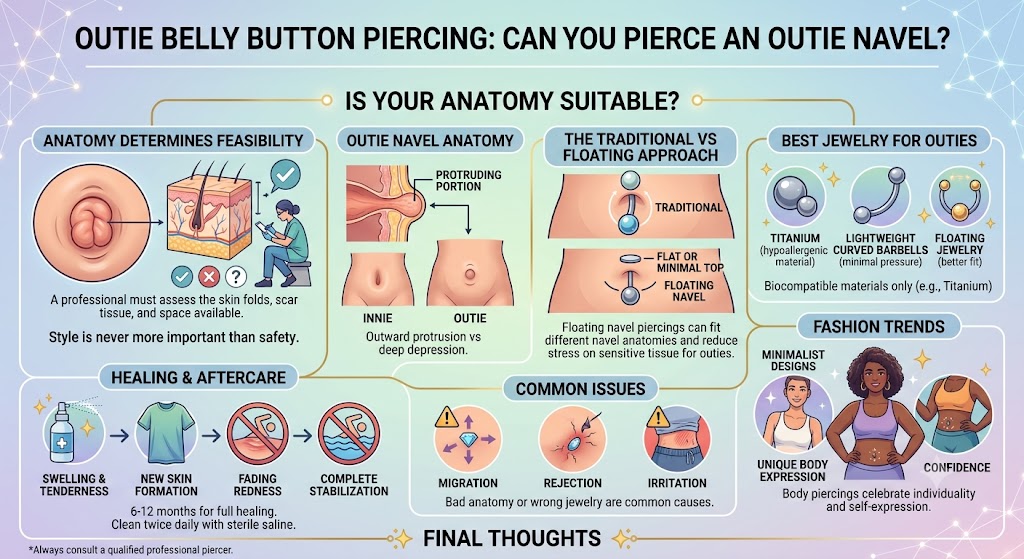
Your navel’s anatomy is the most crucial determinant in safety, placement, and healing. A professional piercer carefully studies your skin’s structure before deciding whether a piercing is feasible. In certain circumstances, a traditional belly button piercing could work well. In other circumstances, a floating navel piercing is better.
This guidebook explains everything in simple terms. You will learn about anatomy, jewellery styles, healing, risks, and fashion trends to help you make an informed choice.
What Is an Outie Belly Button?
An outie belly button is a naturally occurring variety of navel anatomy in which a portion of the button protrudes outward rather than inward. This occurs when the umbilical region moves as the body recovers from childbirth.
Being an outsider is not a terrible thing. Only the structure of the body is changed. While some people have a more elevated or protruding navel (outie), others have a deeper one (innie).
This structural variation makes the anatomy of belly piercings significant. The cartilage-like stiffness, scar tissue, and skin surface around the navel all affect how safe a piercing is.
Both innies and outies are accepted in the body-alteration culture. However, a more cautious approach to safe piercing insertion is required for outies.
Can You Pierce an Outie Belly Button?
Yes, but only under certain conditions. Not all outie belly buttons are meant for body piercings.
A competent piercer will assess the shape, tightness and girth of your belly button. They offer enough of level space for jewellery to sit comfortably.
If the structure allows, a curved barbell is okay. If not, the piercer may recommend a floating navel piercing, which is better for those with odd body shapes.
Here is the important thing:
- The strength of the folds of skin around the belly button
- Space for diamond arrangements
- The possibility of rejection or relocation
- rubbing and movement of clothes
Anatomy always dictates whether a piercing is safe, not just personal taste. A good piercer will turn you down if the risk is too high.
What Is a Floating Navel Piercing?
The floating navel piercing is a trendy jewellery design for challenging belly button forms, such as some outies.
The floating jewellery, instead of a usual curving barbell with two ornate ends, has a weighted bottom and a flat or minimal top. This reduces stress on sensitive tissue and increases the comfort of the piercing.
This approach works because
- It helps to reduce pain with movement.
- It can fit different navel anatomies.
- It decreases the chances of the jewellery being refused.
- It creates a tidier, less cluttered appearance.
Floating navel jewelry has become such a popular piercing trend these days because of its convenience and style. It is a safer long-term option for many people with outie navels.
Best Jewelry for Outie Belly Button Piercings
Most people do not know how important choosing jewelry is. If the material or form is improper it could make recovery more difficult and increase discomfort.
For outie belly button piercings you will notice that the professionals commonly recommend:
- Titanium jewellery can be inserted and is biocompatible.
- Light weight curved barbells to help relieve pressure
- Floating belly button jewellery for improved fit and comfort
Titanium is particularly useful since it decreases allergic reactions and speeds up recovery. Surgical steel is also used but only if it is good quality and nickel safe.
Good jewelry should never squeeze the flesh too hard. There should be no friction, it should flow smoothly with your body.
Pain Level and Healing Process
An outie belly button piercing is usually a bit painful. Most people say it feels like a fast pinch followed by some light pressure.
Healing, however, takes more time. Healing from a belly button piercing might take six to twelve months depending on your anatomy and after-care regimen.
Your body heals in a few steps:
- The primary swelling and tenderness
- Formation of new skin tissue
- A progressive fading of redness
- Complete stabilisation of the piercing channel
Outies may take a little longer to heal because the area may be more exposed and vulnerable. Tight clothing might also impede healing by causing friction.
At this point, patience and hygiene are key.
Belly Button Piercing Aftercare Tips
The key to a good recovery is proper aftercare. Inadequate care can lead to rejection and an increased risk of infection.
You should develop simple but reliable habits:
Clean the area with sterile saline solution twice daily. Avoid using alcohol based products and harsh washes as these will irritate healing skin.
It is also important to:
- Do not touch the piercing with unwashed hands.
- Wear loose clothes to avoid chafing.
- Do not moisten the area after cleaning.
- Stay away from swimming pools while you are healing.
Aftercare is easy but you have to do it frequently. Minor mistakes could set back healing by months.
Common Problems With Outie Belly Button Piercings
Outie navels are more challenging than innie piercings because to their shape and openness.
Typical issues include:
- Migration: The slow moving of jewellery from its original place.
- Rejection: The body rejects the jewellery.
- Irritation: from friction or movement of clothing
Usually these complications are the result of bad jewelry choices or bad anatomy. That’s why it’s essential to have a professional evaluation before you get pierced.
Most of these hazards are considerably reduced when a piercing is done professionally with the necessary equipment.
How to Know if Your Anatomy Is Suitable?
You can’t tell if someone’s right for you by looking in the mirror at their belly button. A good piercer will take time to evaluate the anatomy of the piercing.
They are proof of:
- The thickness of the skin and the depth of the folds
- The space reserved for diamonds
- How your navel moves as you bend/sit
- Sensitivity or scarring levels
If your outie doesn’t lend itself to a traditional piercing, your piercer might propose a floating navel option, or tell you not to get it pierced at all.
This can avoid problems in the long run. “Style is never more important than safety.”
Belly Button Piercing Trends and Fashion Culture
Traditionally, navel piercings have been connected with alternative fashion and body art. By the early 2000s, they had become a staple in popular fashion and celebrity culture, and they continue to evolve today.
Contemporary trends are mostly aimed at:
- Simple jewellery designs
- Floating belly button designs
- Titanium and skin-friendly materials
- Trendy, subtle body alterations
Belly piercings are not only trendy embellishments any longer. They are a statement of confidence, distinctiveness and personality. Many people use them as a way of expressing themselves rather than just utilising them as decorations.
Social media has also influenced new trends such as the public celebration of distinctive body piercings.
Is an Outie Belly Button Piercing Worth It?
If you take good care of yourself and your anatomy allows it, an outie belly button piercing could be beneficial. The attractiveness of body jewellery is its unique flair.
But it also requires dedication. Not every body type will fit, and mending takes time.
You might like to consider:
- Safety first, always.
- The long recovery period
- Floating jewelry requirement
- Long term care obligations
If your piercer is on board, the result can be both beautiful and safe. However, if they do not recommend it, you should respect their decision.
Final Thoughts
You can get an outie belly button pierced, but it’s not always suitable. The form of your navel determines what jewellery looks well on you and how fast you heal.
For odd belly button forms a floating navel piercing usually works best. With the correct jewellery, hygienic aftercare and skilled coaching, you may minimize dangers and enjoy a safe piercing experience.
Ultimately safety and attractiveness should always be balanced when it comes to bodily alteration. If done properly, an outie navel piercing may be a stylish and confident way to show off your individuality.