A common method for achieving a radiant skin tone without being in the sun is indoor tanning. However, a lot of individuals are unaware that using the proper tanning lotion on a tanning bed can drastically alter the outcome. It protects your skin, accelerates tanning, and enhances color quality.
Everything is explained in plain language in this manual. You will discover the best type of tanning lotion, how to apply it safely, and how it works.
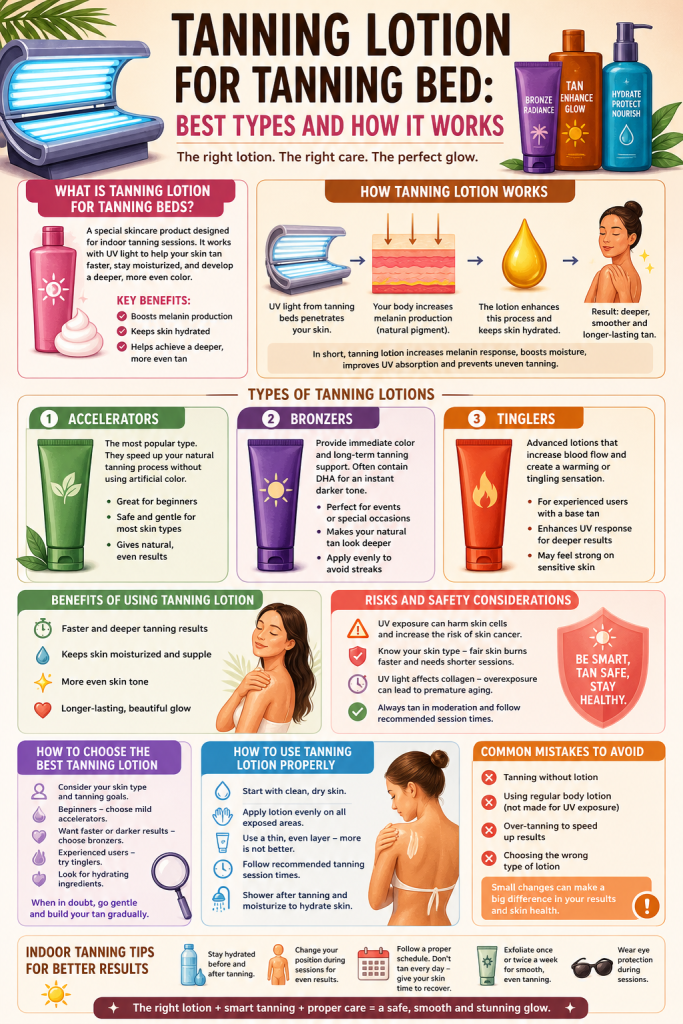
What Is Tanning Lotion for Tanning Beds?
A unique skincare product designed for indoor tanning sessions is tanning lotion for tanning beds. It functions in tanning beds when exposed to UV radiation.
Standard body creams are not the same as these lotions. They are made to respond to UV radiation indoors and encourage your skin’s natural tanning process.
The majority of indoor tanning products have three benefits:
- They aid in the skin’s melanin production.
- When exposed to UV radiation, they keep the skin moisturized.
- They assist you in getting a more consistent, deeper tan.
Melanin is essential in this situation. The natural pigment that gives your skin its color is called melanin. Your skin darkens and produces more melanin when exposed to UV rays.
The foundation of indoor tanning is controlled exposure to UV radiation. This procedure can delay the benefits of tanning and result in dry skin if the right lotion isn’t used.
How Tanning Lotion Works?
The purpose of tanning lotions is to enhance your skin’s response to UV light in tanning beds. Seldom do they “colour” your skin instantly. Rather, they encourage your body’s natural tanning reaction.
Here’s a little explanation of how it functions:
Your body begins to produce more melanin in response to UV exposure. This reaction is enhanced using a premium tanning lotion. It also prevents drying out by keeping your skin hydrated and supple.
It could be challenging to achieve an even tan on dry skin. Staying hydrated is therefore essential. Healthy skin appears smoother and tans more quickly.
Additionally, some sophisticated lotions contain components that enhance circulation or provide a fleeting bronzing effect. As your natural tan develops, the effects become more noticeable more quickly.
To put it briefly, tanning lotion functions by:
- Increasing the melanin response
- Increasing the moisture content of the skin
- Encouraging greater absorption of UV light
- Preventing the negative effects of uneven tanning
Types of Tanning Lotions
There are differences in tanning creams. Depending on your skin type and tanning objectives, each kind functions differently.
Accelerators
The most popular kind of indoor tanning lotion is called a tanning accelerator.
They are intended to hasten the process of natural tanning. Artificial colors are not used by them. Rather, they speed up the production of melanin by your skin.
These are safe and gentle for most skin types, making them ideal for beginners.
Accelerators are a fantastic option for consistent, organic outcomes if you’re just getting started.
Bronzers
You may get both immediate color and long-term tanning support from Bronzer tanning lotion.
DHA (dihydroxyacetone), which combines with the skin’s surface to produce a darker tone, is commonly found in these lotions.
Bronzers are helpful if you want immediate, noticeable results prior to a major event or occasion.
They also make your natural tan look deeper and richer.
Bronzers must be used carefully, though. Streaks could result from uneven use.
Tinglers
Tingler lotions are more sophisticated.
They produce a tingling or warm sensation and improve blood flow to the skin. Your skin reacts to UV exposure more quickly as a result of this improved circulation.
It is not advised for novices to use these. Experienced users who already have a base tan are better suited for them.
Although sensitive skin may experience a strong sensation, tinglers can have significant advantages.
Benefits of Using Tanning Lotion
Beyond simply boosting color, using a tanning lotion for tanning beds has several significant advantages.
First of all, it facilitates quicker tanning results. When the skin is properly moisturized and maintained, it reacts to UV exposure more favorably.
It also enhances the texture of the skin. Skin that is well-hydrated seems smooth and healthy. Additionally, it makes your tan look more uniform.
Third, UV-induced dryness is lessened with tanning creams. The moisture that indoor tanning may cause the skin to lose can be restored with a decent lotion.
Among the main advantages are:
- Deeper and quicker tanning outcomes
- Increased skin suppleness and moisture
- A more uniform skin tone
- A shine that lasts longer
To put it briefly, tanning lotion enhances the appearance of your tan as well as the procedure.
Risks and Safety Considerations
Tanning indoors should always be done with caution. UV exposure still has an impact on your skin, even with tanning products.
Excessive UV radiation exposure can harm skin cells and raise long-term dangers. Skin cancer is one of the main problems. Over time, severe or regular UV exposure has been connected to skin cancer.
As a result, moderation is crucial.
Knowing your skin type is also essential. Shorter sessions are needed since fair skin burns more quickly. Even while darker skin can tolerate greater exposure, it still need care.
Skin health is another crucial component. The amount of collagen in the skin is impacted by UV light. Collagen keeps your skin firm and young-looking. Collagen degradation may eventually result from prolonged UV exposure.
To be secure:
- Avoid using tanning beds excessively.
- Adhere to the suggested session times at all times.
- Always use the appropriate tanning lotion.
- Moisturize your skin after tanning.
Aggressive tanning is never as safe as balanced tanning.
How to Choose the Best Tanning Lotion?
Your skin type and objectives will determine which tanning lotion is ideal for tanning beds.
Use a mild accelerator lotion if you’re just getting started. It promotes natural tanning without having a significant impact.
Bronzers work best when you want a darker tone or faster results.
Tinglers are an option if you have experience and want more profound feelings.
Examine the ingredients as well. Hydration components found in premium tanning lotions preserve your skin barrier and promote skin hydration.
Here is a quick guide:
- Mild accelerators for fair skin
- Moderate bronzers or accelerators for medium skin
- Bronzers or complex formulations for dark skin
If you have sensitive skin, stay away from strong chemicals at all times.
How to Use Tanning Lotion Properly?
Selecting the appropriate tanning lotion is just as crucial as applying it.
Start with dry, clean skin. Before using the tanning bed, evenly apply tanning lotion. A good tanning lotion for tanning bed use boosts results, hydrates skin, and helps achieve a smooth, even glow. Ensure that every exposed area is covered.
Avoid using excessive amounts of product. It is better to have a thin, uniform layer.
Be especially mindful of time constraints when receiving tanning treatments. Results are not improved by overexposure. It just raises the possibility of skin injury.
To retain moisture after tanning, apply a moisturizer and take a quick shower.
When applied properly, it results in:
- Even tanning outcomes
- Quicker UV radiation absorption
- After tanning, skin is healthier.
Common Mistakes to Avoid
Many people make easy mistakes that lessen the impact of tanning.
Ignoring lotion entirely is a common error. By drying off the skin, this stops tanning.
Using ordinary body lotion is another error. Regular lotions could be able to lessen the effects of tanning because they are not made for UV exposure.
In an effort to expedite results, some also over-tan. In reality, this damages the skin and may result in burns.
Steer clear of these errors:
- Tanning without the use of lotion
- Using skincare products that don’t tan in bed
- Prolonged tanning
- Selecting the incorrect kind of lotion
Results can be significantly improved with minor adjustments.
Indoor Tanning Tips for Better Results
Both lotion and a regimen are necessary for good tanning effects.
Drink plenty of water both before and after sunbathing to stay hydrated. Hydrated skin tans more evenly and seems healthier.
Change the way your body is positioned during tanning sessions. This prevents uneven tan lines.
Follow a suitable timetable. Avoid tanning on a daily basis. Give your skin time to heal and produce melanin on its own.
Maintaining a consistent skincare regimen may also help you achieve greater outcomes. Skin that is moisturized and clean reacts to UV light more favorably.
Additional helpful advice:
- Once or twice a week, exfoliate your skin.
- Before tanning, stay away from strong odors.
- Throughout sessions, wear eye protection.
These little steps enhance security and outcomes.
Final Thoughts
There is more to a tanning lotion used in tanning beds than just cosmetics. It has a big impact on how your skin reacts to UV exposure indoors.
The proper lotion maintains your skin healthy, speeds up your tan, and enhances your overall appearance. When choosing an accelerator, bronzer, or tingler, you should consider your skin type and expertise level.
But it’s crucial to keep in mind that smart tanning is safe tanning. Balance is crucial because UV exposure has an impact on the health of your skin.
You may achieve a smoother, deeper, and longer-lasting glow without taking needless chances by combining the right lotion, skincare practices, and supervised tanning sessions.