A septum piercing is stylish, hip and edgy. For many it is a part of the alternative fashion and body jewellery culture. But when it’s over, there’s one major question that keeps popping up.
When can I change my septum piercing?
Each of us has a different solution to that. It depends on the healing time, how your body reacts and how well you take care of it. If you do it too fast, you can cause pain, irritation, or even infection. So it’s incredibly crucial to be patient.
In this article we will explain everything in simple language so you can understand clearly the healing process for your septum piercing and when you can change your ring.
What Is a Septum Piercing?

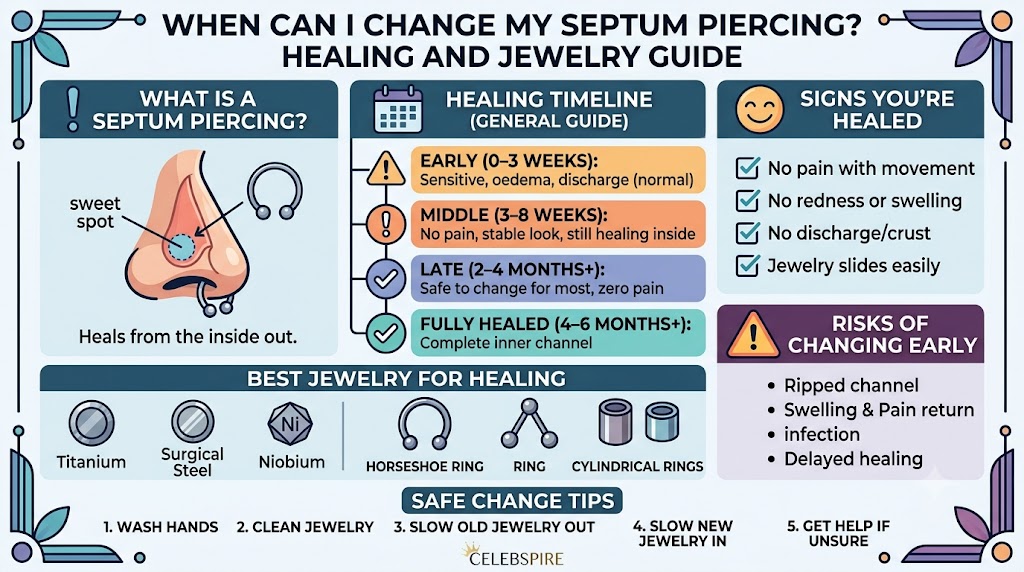
A septum piercing goes through the tiny piece of tissue between your nostrils. When done correctly it will not go through hard cartilage . That soft part is called the “sweet spot”.
Here are some reasons why people appreciate septum piercings:
- Simple to display or hide
- Jewellery: elegant and flexible
- Popular culture: fashion and celebrity culture
You also have the option of numerous types of body jewellery, such as horseshoe rings or seamless rings. It is worn by many as a part of themselves.
When Can You Change a Septum Piercing?
The best and safest approach is to just change your septum piercing after it’s fully healed.
Most people heal in 6 to 8 weeks. It may take 2 to 4 months or longer to totally heal.
Some are quicker to heal. Others require time. It’s:
- Post operative care plan
- Skin sensitive;
- Lifestyle practices.
- Quality of jewellery
If you change it too soon you may irritate or even harm the hole where the piercing was made. This is why piercers would usually encourage you to wait until it feels totally normal.
As a guideline it is:
“You’re not supposed to hurt or pressure or swell when it’s ready.
How Long Does a Septum Piercing Take to Heal?
Septum Piercing Healing Doesn’t Happen Overnight. The jewellery is stable and your body ultimately makes a tunnel around it.
Early Healing Stage (0–3 weeks)
That is the sensitive region. You may see:
- Some oedema.
- Touch sensitive
- Watery discharge (some)
Most of the time it is not infection but normal healing process.
Middle Healing Stage (3–8 weeks)
The anguish ceases. The stab wound appears more stable. But weak there is yet in it. You look good on the outside.
But the tissue is still healing on the inside.
Late Healing Stage (2–4 months)
This is the safer portion. My piercing normally doesn’t hurt a bit. You can turn your nose without pain.
Many folks can change jewels easily this moment.
But other people might take longer to heal inside.
Signs Your Septum Piercing Is Healed
Before you modify your septum jewellery, take a hard look at your physique. Healing should not only be complete, it should seem complete. Good signals are:
- No pain when you touch or move the diamonds.
- No redness or swelling
- No discharge, no encrustations
- Slides on jewelry easily without irritation
- You don’t even realize it exists
If your piercing still feels “there” it just needs time.
Healed septum piercing is fine for everyday. You are to be neither too sensitive nor too much under strain.
What Happens If You Change It Too Early?
It is a huge error to change your septum ring too quickly. That may sound harmless but it can really impede the healing process.
This is what can happen.
- The piercing channel might be somewhat torn
- Swelling and redness may reappear
- The discomfort could return back
- The capacity to heal anew
Sometimes the hole may partially close making it difficult to insert jewelry.
Your body considers the change of early jewelry a minor injury. So it affects irritation and inflammation.
That is to say, early change delays your healing process.
Best Jewelry for a Healing Septum Piercing
Timing is one thing but choosing the correct jewellery is equally essential. Good materials irritate less, and they help healing.”
Safe options include:
- Titanium Jewellery
- Surgical steel jewellery
- Niobium (sometimes)
They are smooth and resilient and are unlikely to cause allergic reactions.
Common beginner styles:
- Horseshoe ring (most common phase of healing)
- Small sticks, cylindrical
- Seamless rings (once healed)
No cheap metals. Causes of low quality jewelry:
- Irritation bumps
- Pruritus (itching)
Slowly healing Also, make sure the size is correct. Jewellery that is overly tight or loose can be uncomfortable and rub against the skin.
How to Change a Septum Piercing Safely?
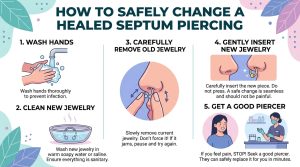
Make sure to be careful when reinstalling jewellery after your piercing has healed.
Use clean and gentle process:
First wash your hands. Wash hands to avoid any possibility of infection. Next, wash the new jewellery in warm or salt water. Be sure that everything is sanitary.
Next, slowly remove the old jewellery. Don’t force it. If it jams, pause and carefully try again.
Carefully insert the new jewellery, do not press. If you notice pain, stop use immediately.
If you don’t know, get a good piercer. It may be safely replaced in minutes.
A safe change should be seamless, not painful.
Septum Piercing Aftercare Tips
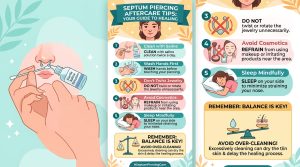
Good aftercare means your piercing heals faster and there’s less chance of problems. Simple behaviours make a big difference.
- Clean the piercing with saline solution, once or twice each day
- Don’t contact with unclean hands
- Don’t twist or move the jewellery unnecessarily
- Refrain using cosmetics or irritating products in the area
- Sleep on your side to minimize straining your nose
Another error is over-cleaning. Overly cleaning might dry the skin and delay the healing process.
The trick is balance.
Common Septum Piercing Mistakes

There are many tiny mistakes that novices make that hinder healing or increase irritation. Don’t do this:
- Remove jewelry too soon
- Inexpensive metal or allergenic
- Excessive cleaning of the piercing
- Frequently touching it without cleansing hands
- Missing early indications of discomfort
Your healing period can be affected by even the smallest slip ups . You want stability not constant disruption.
Why Septum Piercings Became So Popular?
Septum piercings are not only a passing craze. They are part of the culture of fashion today.”
They have become popular for reasons
- Celebs and influencers wear it
- Increased activity on TikTok and other social media channels
- Their fashion style is simple and edgy
- They work for dramatic and subtle looks.
They’re versatile. And they’re liked by many people.” You can wear them to work or you can wear them socially.
They are also a form of individualism and self-expression in body modification culture.
What Happens During Septum Piercing Healing?
Healing is a biological thing. Your body will build new skin tissue around the jewelry. It is first sensitive and delicate. It improves and becomes stable over time .
Mild irritation is to be expected during recuperation. But not for chronic pain.
Your job is easy:
Don’t bother with the piercing.
If you are supportive, healing process becomes easier and faster.
Can You Change Your Septum Piercing Yourself?
Yes but only if it is fully healed and you are sure.
But many still choose for the services of a professional piercer for:
- It decreases the risk of injury
- Ensures precise placement
- Eliminates needless agony
If you’re not used to changing jewelry, it’s best to get professional assistance.
Does Changing a Septum Piercing Hurt?
A fully healed piercing shouldn’t hurt. You will feel a little pressure but you will not feel discomfort.
If you are in pain it means:
- Has not healed entirely
- Or the jewellery is not positioned appropriately
Never rush her. Pain is your body’s alarm signal.
What Is the Safest Timeline?
Here is a simple guide .
- 0-6 weeks: Do not change jewellery
- 6 – 12 weeks: Only feeble healing if
- 3-4 months: Usually safe for most people
- 4 months: Little change
The temporal frame is vast. Your body may heal fast or sluggish.
Final Thoughts
When may I change my septum piercing?
The best answer is simply when it is completely healed and completely pain free.
Hastening the process may cause discomfort, oedema and delayed healing. But if you’re patient and take proper care of it, your piercing will settle in well.
Choose top quality body jewelry, follow hygiene rules and listen to your own body. Healing is not a contest. It is a process:
A nicely healed septum piercing looks good but it is also pleasant in your day to day life.